Charlie

Charlie Russell loves to hike in California, and take wildflower pictures!

rss feed

Paradise Serpentine Barrens

| March 27, 2013 | Comments (2)
Sierra Fawn Lily

OK, it sounds odd, “Paradise” and “Barrens” together? Well, “Paradise” in this case is the town of Paradise, near Chico, and the “Serpentine Barrens” is an interesting trail just past the town. There wasn’t a huge variety of flowers here, but it was still a wonderful wildflower hike.

Serpentine is the “state rock” of California, and when there is a lot of it you find harsh conditions for plants. So you tend to see less variety, a more “barren” area. You also tend to find plants that prefer these conditions, that you might not find elsewhere.

Sierra Fawn Lily

Sierra Fawn Lily

This isn’t a trail that you’ll find described in any guides. I hadn’t heard of it until my friend, photographer Spencer Dykstra, wrote about it in his blog. I pestered him for details, and I’m glad we went, because the Sierra Fawn Lilies were fantastic! See Spencer’s excellent photographs of them here and here.

While we didn’t see a wide variety of flowers, there were masses of these beautfiul Lilies all along the trail. You don’ thave to go far to see them, but if you take the hike you can find a number of interesting flowers.

Note: Click on any photograph to see a larger image.

The Hike

Trailhead

Gate at trailhead

The trailhead is between Paradise and Magalia, at an unmarked turnout. This is PG&E property, not a state park or nature reserve. There is a well maintained gravel road that goes down the hill towards the Feather River that you can hike down if you are in a hurry, but you’ll miss a lot if you do.

Start down the road, but just after you go around the first bend (just a few hundred feet) look for a trail that heads down off the east side of the road (where my wife is standing in the picture below). These trails are maintained by local volunteers.

Start of Trail

Start of Trail

We didn’t have to go far to see the Sierra Fawn Lilies, there were quite a few within just a few yards of the road. We were quite amazed, to tell the truth – usually when we visit these kinds of harsh locales you spend a lot of time hunting for a few flowers (such as at Traverse Creek). The further we went down the trail, the more lilies we found. Masses of them!

It’s a good thing that there weren’t many other hikers on the trail, my wife and I were getting giddy because there were so many lilies!

Trail

Serpentine hillside

The trail wanders about. There are sections where you are crossing the exposed, dry serpentine hillside, and others where you are walking beneath the shade of the pine trees. It is a bit steep in some places, but you aren’t scrambling down (or up) over the rocks or big steps.

You do have to pay attention to the trail – there are a lot of branches that lead off in unexpected directions, and a couple of times we found ourselves wondering if we were actually on a “trail”. The PG&E service road isn’t far away, so you have one good boundary to keep you in line. It wasn’t much of a problem.

Note that there is some poison oak in the area – not a lot, but you want to be careful if you are going through the brush.

As far as I could tell the “main” trail heads down 2/3 of the way to the river, and then it meets the road. We did take the road the rest of the way down to the river, but that last portion wasn’t very interesting. You don’t have easy access to the river, as the road takes you to a small PG&E dam that is closed off from visitors.

It is a bit steep in places, with a fair amount of elevation change overall. I’ll guess that we hiked about four miles, with around an 800 foot elevation change, but that is just a rough estimate.

Timing is Everything

Thanks to Spencer’s recommendations we hit this on a perfect day, in mid-March. Lots of Lilies, and a few other flowers. There were signs that there would be a different selection of flowers at the lower part of the trail over the next few weeks. It was a sunny day, temperature in the upper 60′s for the most part. Given that this is a drier Spring than normal, I would expect that you would normally want to come here late March to early April.

Directions

Iris

Iris

I guess directions depend on where you start. Let’s start from Highway 99 in Chico.

  • Take exit 383 on Highway 99 in Chico.
  • Turn east on Skyway Road, which takes you through Paradise.
  • After 15 miles you will continue on New Skyway Road (just continue straight through the intersection, “Old Skyway Road” turns off to the left).
  • Another 0.9 mile, and you come to the intersection with Coutolenc Road (which has a traffic signal). Turn right on Coutolenc Road.
  • Just about 500 feet along Coutolenc you will see a turnout on your right (the first turnout that isn’t a residence driveway). You will see a gate across the gravel road that is at the back of this turnout. Park here, walk down the gravel road past the gate.
  • About 200 feet further on, after you go around the first bend in the gravel road, look for the trail on the east (right) side of the road.
I’ve added a marker for Table Mountain, which is one of my favorite flower spots in the spring. It is only 23 miles away from this hike, and well worth a visit. I have some additional pictures from here in my page in Facebook, and as well as in my page in Flickr, from this same trip.

The Flowers

Please feel free to help me with the identification of any “unidentified” flowers listed here, as well as correcting any errors I may make. Click on any photograph to see a larger image. I’ll start with a few favorites, and then the “gallery”. All pictures were taken with a Nikon D7000 with either a Nikkor 18-135mm zoom lens, or a Nikkor 60mm closeup lens.

The star of this hike is the Sierra Fawn Lily. Note the spotted leaves. It is clear that this flower has an affinity for serpentine soils, we found masses of them in the rocky areas, and almost none when you moved over to the areas that had a different soil type. These were worth the trip by themselves.

Erythronium multiscapideum

Sierra Fawn Lily

The Butte County Fritillary is a rare flower, and it comes out a bit later than the Sierra Fawn Lily. We found just a few of these, mostly near the top of the trail.

Butte County Fritillary

Butte County Fritillary

I’m not sure which Iris this is, we found very few on this hike, mostly on the lower section. There will be more showing later in the season (although the sparse rainfall this year may affect that).

Iris

Iris

Blue Dicks seems to be the most common flower in Northern California. We find them on most hikes.

Blue Dicks

Blue Dicks


Read More

Stebbins Cold Canyon Reserve Wildflowers

| March 14, 2013 | Comments (7)
Indian Warrior

The Stebbins Cold Canyon Reserve is an interesting site to visit in the Spring. Close to Lake Berryessa in the coastal range of Northern California, you have a couple of options. You can take the short hike up and back down the canyon for a relatively easy (and interesting!) hike, or you can go up the canyon and then climb up to the top of the nearby ridge for a more strenuous hike with some great views.

Indian Warrior

Indian Warrior

We’ve done the shorter canyon hike in the past, accompanied by our young grandson. It is a great family hike, hard enough for some exercise but not too hard for smaller kids. Lots of families take this hike. In the Spring there usually is water in the creek, which is a fun diversion when the kids get tired of just hiking.

This time (since we didn’t have any grandkids along) we decided to continue up and go the full loop, which is certainly more strenuous. We were pleasantly surprised by the diversity of wildflowers in the canyon itself, and there was a very different assortment in the higher part of the trail that we wouldn’t have seen if we didn’t continue to the higher part.

Note: Click on any photograph to see a larger image.

The Hike

Detailed information on this area can be found at the UC Davis Stebbins Cold Canyon Reserve website.

There are two portions to this trail, you can decide if you want the relatively easy hike, or the very energetic hike. Fortunately, the easy hike has the most flowers.

The easy portion is the “Homestead Trail”, which heads up the canyon for a bit over a mile. At this point you can turn back and return to the start, so the the total is a bit over two miles.

However, if you don’t turn back, you can continue on to the “Blue Ridge Loop Trail”, which is an additional four miles, for a total of five.

Stebbins Cold Canyon Map

The trailhed is at the base of the canyon, at Highway 128 west of Winters. You start off going uphill into the canyon, more or less running along Cold Creek on the Homestead Trail. I recommend that you get the PDF map and trail guide, as the trail has a number of numbered markers that are explained in the guide.

Foothill Shooting Star

Foothill Shooting Star

The trail isn’t difficult, although there are a few places where you may scramble over the rocks. It is well marked, but there are a couple of branches to the harder trails (we haven’t hiked the Pleasants Ridge trail that heads off to the east). One warning, though – there is a LOT of poison oak in this area, right up to the trail. Stay on the trail!

The nice thing about this trail is that you don’t NEED to go off trail to find the flowers, they are scattered about all along the way. Just keep your eyes open so that you don’t miss anything interesting. This is a nice hike that has a fair amount of shade from trees along the way.

At marker 24 there is a short side spur in the trail that leads to the creek. There may be some nice pools there, and on this trip we saw several California Newts swimming lazily around the rocks. I didn’t think we would see them, it was a bright and sunny day, but if you are patient you may find them (this isn’t a great picture, taken through the water).

California Newt

California Newt

The Homestead Trail ends at, surprisingly enough, the Homestead. You’ll see the rocky remains of a farmhouse and cold storage shed from the late 1930′s. At this point you have a choice to make – turn around and head back downhill (completing the two mile hike) or continuing on further up the Blue Ridge Loop Trail, for a total of five miles. If you have small children with you, I recommend heading back down the way you came.

Keep in mind as I describe this next section that this was my first hike of the season, and that I’m getting older.

Blue Ridge Loop Trail

See the trail going along the ridge?

Starting up the trail from the homestead you have a fairly steep climb. THe trail is well maintained, you’ll be climbing up a long serieis of stairs. Steep stairs. Fortunately, there are a number of flowers to find along this section, so there is ample opportunity to stop to take a picture (catch your breath). You are still mostly in the trees, so it isn’t too hot and exposed. I did find this section very strenuous.

The next section is higher on the ridge, and more exposed. You start to see more Manzanita, and a lot of Ceanothus (which was wonderful, covering the hillsides with fragrant white blossoms). Not many steps, now you are heading up a narrow track that runs right along the ridge. In some cases you are looking at a dropoff from both sides of the trail. A wonderful view both ways! However, you are still climbing (the trail gain is roughly 1300 ft) and it is again very strenuous. A different collection of flowers up here, including quite a few Indian Paintbrush. I was watching the Turkey Vultures overhead, but they weren’t circling around me yet.

After climbing up to and along the ridge, you get to the “bouldering” section. Slow going, the trail leads you across rugged rocks right on the top of the ridge. Very wonderful views, and still more flowers. You have to pay more attention to your feet because of all the rocks – and to take note of where the trail actually goes. We only got off track one time. Now I’m watching the Turkey Vultures circle nearby – not overhead, we were actually looking down at them flying below us.

Lake Berryessa from Blue Ridge Loop Trail

Lake Berryessa

After this the trail heads back down – more steps along the way. I’m not sure which I like the least, going up these steps or heading down the steps. My wife made good use of her trekking poles. This section runs across a more exposed hillside, and even here we found a different collection of flowers.

I don’t want to make this sound too bad. I have to admit that I wasn’t quite prepared for a hike quite this energetic, but it was VERY enjoyable and I was surprised by the variety of wildflowers that we found. If we hadn’t taken the Blue Ridge Loop trail we would have missed some wonderful flowers, and views. I’ll also note that even the high trail had quite a few hikers - many who were passing us by, and even some runners.

Timing is Everything

The weather was excellent, a clear sunny day with temperatures reaching the mid 70′s. Since this is in the valley side of the coastal range it can get quite warm and dry in the summer, but the Homestead trail can be quite nice later in the year since it is shaded and protected.

We hiked in early March and found a wonderful variety of flowers. Temperatures were in the mid 70′s and there was just a hint of a breeze up on the ridge. You can come earlier in the year, but you have to watch for wet conditions. According to the UC blooming calendar you can find flowers from February through September, although the best time would be March/April.

We could see the starts of quite a few lilies and Iris, so April should be very showy but with a different collection of flowers.

Directions

Start off in Winters. If you are in town for lunch I recommend trying the Preserve Public House for sandwiches – very, very tasty, and less crowded on weekends than the more well known spots in town. The Putah Creek Cafe is well known (and excellent) but on a weekend it can be a long wait to get in. If you are back in time for dinner you should consider the Buckhorn Steakhouse (but expect a long wait if you don’t have reservations on the weekend).

Take Highway 128 west through Winters towards Lake Berryessa. About 8.5 miles west of Winters the highway crosses Putah Creek.  Just after the bridge you will see overflow parking for Stebbins Cold Canyon Reserve. The main parking area is just ahead, about 0.2 miles after the bridge, on the right. The trailhead is across the road – watch for speeding traffic as you cross.

There are no restrooms at the trailhead, or anywhere along the trail. If you are thinking about those bushes, keep in mind what I said about all the poison oak…

The Flowers

Please feel free to help me with the identification of any “unidentified” flowers listed here, as well as correcting any errors I may make. Click on any photograph to see a larger image. I’ll start with a few favorites, and then the “gallery”. All pictures were taken with a Nikon D7000 with either a Nikkor 18-135mm zoom lens, or a Nikkor 60mm closeup lens.

We found Indian Warrior (see picture at the top of the article) along the Homestead trail, mostly near the top of the trail.

I was surprised to find Foothill Shooting Star throughout the hike. I’m used to it being scarce and only in sheltered places. We found it all along the Homestead trail, and even at the top of the Blue Ridge Loop.

Foothill Shooting Star

Foothill Shooting Star

California Pipevine (aka Dutchman’s Pipe) was easy to spot in many places along the Homestead trail.

California Pipevine,

California Pipevine,


Large-leafed Hounds Tongue

Large-leafed Hounds Tongue


Mission Bells

Mission Bells


Wholly Indian Paintbrush (?)

Wholly Indian Paintbrush (?)


Miniature Lupine

Miniature Lupine


Read More

Yosemite Flowers: White Wolf

| February 23, 2013 | Comments (0)
Meadow at White Wolf

White Wolf is a campground and lodge in Yosemite National Park, just off of the Tioga Pass road. There is a meadow next to the lodge, and if you can time it right there is a wonderful display of wildflowers. This isn’t a “hike”, since you can park right next to the meadow, but if you are driving up Tioga Road it is well worth your time.

White Wolf meadow

White Wolf meadow

We visited this area in early August of 2011. Since it is about a mile off to the side of Tioga Road we weren’t planning on stopping, but I’m glad we did. What a wonderful meadow!

Note: Click on any photograph to see a larger image.

The Hike

OK, so it isn’t a hike. The road to the lodge runs right through the meadow. There are several small paths around the main meadow (and through some of the smaller ones by the campground). There ARE some hikes that lead away from White Wolf, but these aren’t short day hikes and we didn’t take any of them. To be honest, we weren’t planning on stopping here on this trip, we had some extra time and thought we’d take a look. What a pleasant surprise!

Timing is Everything

The timing of flowers in the Yosemite area is highly dependent on the amount of snow in the prior Winter, as well as how warm (or wet) it is in the late Spring. This year (2011)  was a heavy snow year and a relatively wet Spring, so everything was delayed by at least several weeks. We visited this area in early August, and the White Wolf area hadn’t been open for very long. If you are planning on visiting early in the summer you should check to see if the road is open.

Directions

White Wolf is 1 mile off of Tioga Road (Highway 120). The junction is about 14.5 miles to the east of Crane Flat, which is close to the Big Oak Flat entrance to Yosemite National Park. This side road ends at the White Wolf Lodge and campground, and you can’t miss the meadows.

The Flowers

Please feel free to help me with the identification of any “unidentified” flowers listed here, as well as correcting any errors I may make. Click on any photograph to see a larger image.

There wasn’t a big variety at the time we were there, but there were masses of purple Shooting Stars mixed with white Western Bistort that were phenomenal.

All pictures were taken with a Nikon D50 with a Nikkor 18-135mm zoom lens, or a Nikkor 60mm closeup lens.

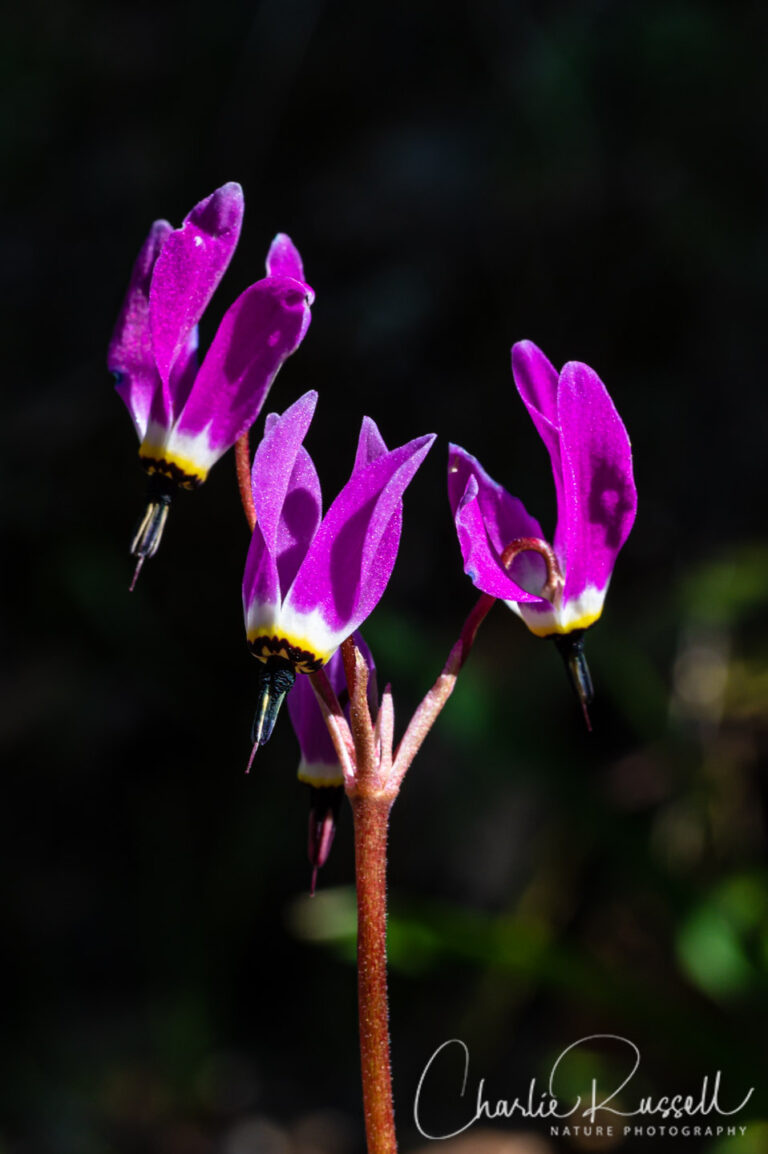
Dodecatheon alpinum

Alpine Shooting Star

I don’t think I’ve seen this many Alpine Shooting Stars at one time. In the pictures of the meadow, most of the purple color comes from these.

Polygonum bistortoides

Western Bistort

By itself, the Western Bistort isn’t what I would call a “spectacular” flower. These are about the size of my thumb – and they are the white flowers you see in big drifts in those meadow pictures.

White Wolf meadow

White Wolf meadow

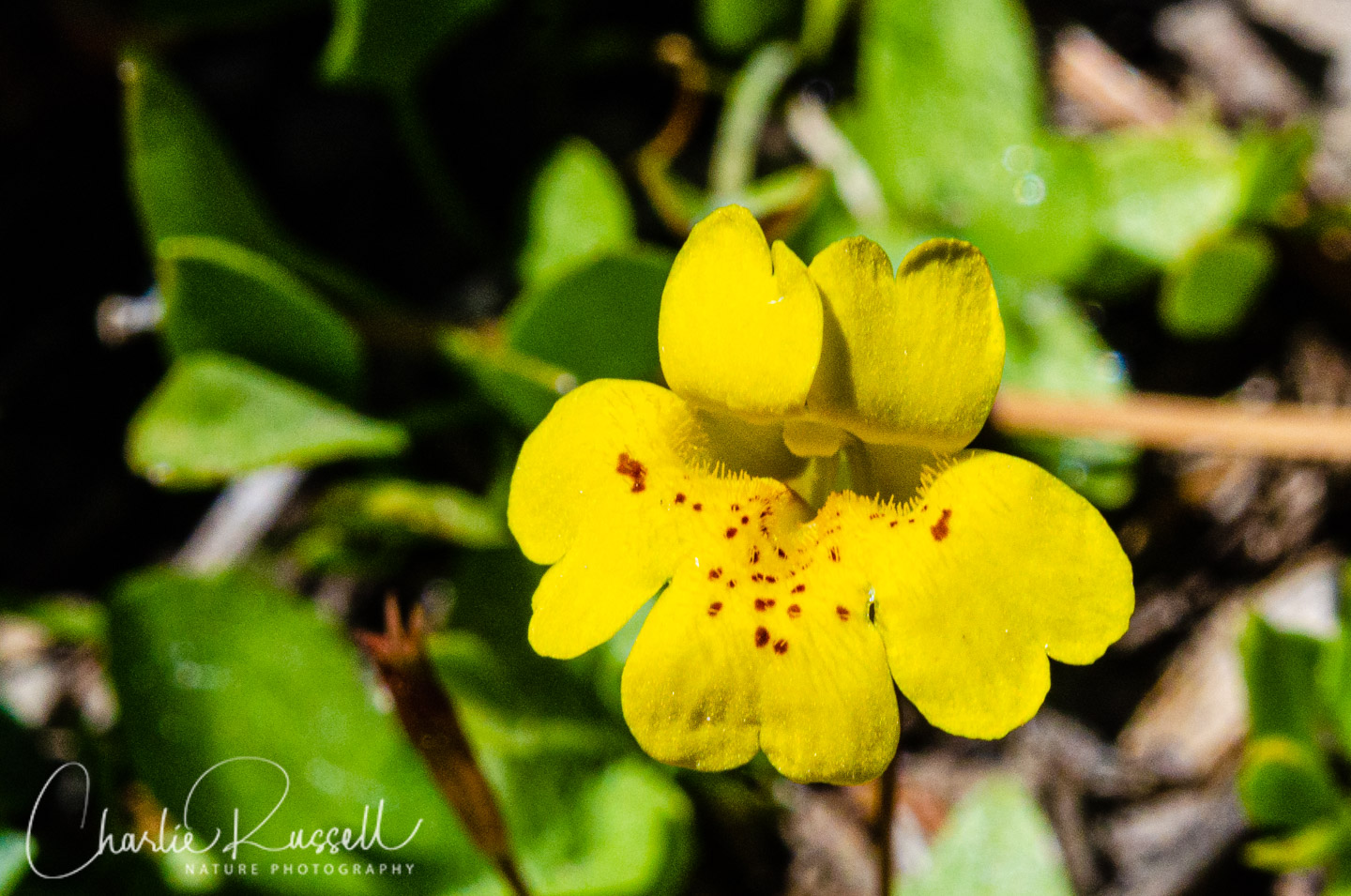
The yellow in that meadow picture is a Monkeyflower.

Viola adunca

Western Dog Violet

You can’t go out into the meadows for the most part, they are very damp (and you don’t want to disturb the display!). There was a nice variety of other flowers around the periphery – you just had to get down low to see them. Further away from the meadow, where their is some shade, we found quite a few of these violets.

Read More

Mt Washburn, Yellowstone National Park

| October 10, 2012 | Comments (0)
Harebells

We’ve been to Yellowstone National Park several times, but never to look for wildflowers. There are so many amazing natural wonders to see, with the geysers, wildlife and waterfalls, that most people don’t see the wonderful variety of flowers that are all around. THIS time we hiked up Mt. Washburn, and found a wider variety of  wildflowers than I expected on this dry, high altitude hike.

Campanula rotundifolia

Harebells

Click on any photograph to see a larger image.

The Hike

There are two trails going up Mt. Washburn, starting at either Chittenden Road or Dunraven Pass. We didn’t know which was best, so we picked Chittenden Road because that was about a half mile shorter.

Trail up Mt Washburn

Trail up Mt Washburn

You should start this hike in the morning because the wind picks up in the afternoon, and this is a VERY exposed hike. On the way down, in the afternoon, it was getting pretty warm. There are a few trees at some points of the trail, but not many. For the most part you are hiking up a service road that leads to the fire lookout at the top of the mountain. The terrain is, for the most part, alpine tundra. Dry and wind swept.

From the parking lot you’ll be climbing about 1400 feet if you get to the top. The final elevation is 10,243 feet. If you aren’t acclimated to the elevation (we weren’t!) you just have to take it slow and easy. It isn’t a hard trail other than the altitude. From this side it is about 3.1 miles to the top.

There were wildflowers all the way up, although there usually weren’t masses of color. You have to keep your eyes open, and pop off onto the side spurs that you may find on the trail.

Mt Washburn trail

Mt Washburn trail

Nearer to the top the trail gets steeper, and there were times when we thought about turning back. I’m glad we kept going, because the view from the fire lookout at the top is wonderful.

The next time we visit here we’ll take the trail from the Dunraven Pass side. We did stop at the trailhead later that day, and there were quite a few flowers right at the parking lot. There is a spring there that provides moisture for a different selection of flowers than what we saw on the drier mountain trail, and it looks like at least part of this trail goes through the forest.

Timing is Everything

We visited Mt Washburn at the end of July. The Chttenden Road side was dry, but there were still a lot of flowers. The Dunraven Pass side was moister (at least at the beginning) and had a greater variety of flowers. Earlier in the year you may find that it gets too cold near the top of the mountain for much to be blooming. Later in the year it is going to be very hot and dry.

Directions

Linum lewisii var. alpicola

Lewis’s Western Flax

Mt. Washburn is in the Tower area of Yellowstone National Park, between Tower Junction and Canyon Village.

The Chittenden Road parking area is 8.7 miles south of Tower Junction. You will turn off the main road and drive up a gravel road to the parking area, which has restrooms.

The Dunraven Pass parking area is 13.4 miles south of Tower Junction. This parking area is right on the main road, and also has restrooms.

Chittenden Road has more room for cars, and tends to be less crowded in the morning. This route is also used by park vehicles (not common) and bicycles.

The Flowers

Please feel free to help me with the identification of any “unidentified” flowers listed here, as well as correcting any errors I may make. Click on any photograph to see a larger image. I’ll start with a few favorites, and then the “gallery”. All pictures were taken with a Nikon D50 with a Nikkor 18-135mm zoom lens, or a Nikkor 60mm closeup lens.

There were quite a few different asters along the trail, at just about every elevation.

Erigeron speciosus

Showy Fleabane

Fireweed is very common in the Park. About half way up the trail there was an interesting stand of trees where a fire must have come through a few years ago, with Fireweed showing why it got its name.

Fireweed under burned trees

We did see a nice variety of smaller mammals such as marmots and golden mantled ground squirrels. The most interesting encounter was this red fox. Looking back on the trail we were excited to see this fox heading up the hill. Hold still so you don’t scare it away? Well, the fox just kept on trotting up the trail towards us, passing us by without even a glance. He passed within a few feet of us, not scared at all.

Red Fox

Red Fox

There was a nice patch of Larkspur right by the trail. I always seem to have trouble getting a good picture of these flowers.

Delphinium occidentale

Duncecap Larkspur (?)

Most of the flowers we found were surviving on the barren, exposed alpine tundra, but at the Dunraven Pass trailhead there was a nice spring, where we found a different selection of flowers like this White Bog Orchid. I’m always amazed when we find orchids in the wild.

Platanthera dilata

White Bog Orchid


Read More

Ptarmigan Falls Trail, Glacier National Park

| August 27, 2012 | Comments (6)
Indian Blanket Flower

This summer we went further afield in search of wildflowers than normal, looking in Yellowstone and Glacier National Parks. We found the BEST HIKE EVER, the Ptarmigan Falls / Iceberg Lake Trail in Glacier National Park.

OK, so this isn’t a “California Wildflower Hike”, but we sure found a lot of wildflowers. Plus spectacular scenery. Plus a grizzly bear…

Indian Blanket Flower

Indian Blanket Flower

Note: Click on any photograph to see a larger image.

The Hike

There are many hiking options in Glacier National Park, although many of them are longer hikes that we usually take. This hike is on the east side of the park, in the Many Glacier area.

The trail starts from the north side of the parking lot by the Swiftcurrent Motor Inn complex, behind the cabins. The starting elevation is a bit over 5000 feet. You head up the hill through the trees and then out into a fairly open area. The first few hundred yards are a bit steep, but the rest of the trail (to the falls) isn’t too bad.

Start of Ptarmigan Trail

Along the way you have a spectacular view of the mountains of Glacier National Park. Every once in awhile you just have to stop, look around, and say “wow!”

I’ve been on several hikes in the Sierra’s in California that have spectacular displays of wildflowers. However, the thing that was unique about this trail is that there were flowers at every step of the way. That is why you have to stop to look at the mountains – as I was hiking along I was always looking at the trailside and finding new flowers. If I didn’t stop and make myself look up I would have missed the beautiful views.

Glacier vista

The trail goes along the side of the mountain, and there were several “seep” sections where the hillside was very wet. Great opportunities to look for orchids.

Later on you re-enter the forest. About 2.5 miles in you come to Ptarmigan Falls. The trail crosses the creek just above the falls, and there is a large open area where you can rest, enjoy the creek, and watch the VERY friendly squirrels that inhabit the area. I’m not sure what the elevation was here, but it is a bit under 6000 feet.

Ptarmigan Creek above falls

Ptarmigan Creek above falls

This was our turnaround point. You can continue up the trail towards Iceberg Lake, which is about 2 miles further on.

Timing is Everything

We visited this area in the first week of August. At first we thought that we were going to hit some bad weather, but it turned out to be a great day for hiking. The clouds kept it cool (mid to upper 70′s probably), and it did rain on us a bit, but not bad. No snow in the area.

The variety of flowers was wonderful! Certainly some flowers were past their peak (notably the Beargrass), but others were just getting started. I’m guessing that anything from mid July through mid August would be great (and possibly a wider range than that).

Directions

Glacier National Park has several fairly separate areas that you can visit. This hike is in the Many Glacier area, which is on the east side, north of the main entrance at St. Mary. We hadn’t planned on visiting this area, as we were anxious to go up the “Going-to-the-Sun Road” to get to the higher alpine area hikes. When a storm came through that morning we decided that hiking on the exposed alpine mountain trails might not be the best choice, so we headed north from St. Mary towards Babb, and then west into the Many Glacier area. Be sure to watch for flowers along the road by Lake Sherburne as you drive into the area.

Seep section of trail

You drive in as far as you can to reach the Swiftcurrent Motor Inn area, where most of the trails begin.

If you hike in Glacier National Park I highly recommend getting a guide book. The advice you get from the information centers varies quite a bit – getting information on finding animals is a lot easier than finding information on wildflowers. The book that we purchased, which I like very much, is Hiking Glacier and Waterton Lakes National Parks by Erik Molvar.

The Flowers

Please feel free to help me with the identification of any “unidentified” flowers listed here, as well as correcting any errors I may make. Click on any photograph to see a larger image. I’ll start with a few favorites, and then the “gallery”. All pictures were taken with a Nikon D50 with a Nikkor 18-135mm zoom lens, or a Nikkor 60mm closeup lens (except for the grizzly bear, when I was using a very long telephoto lens!).

I love finding orchids in the wild. Such delicate flowers. Other hikers probably thought I was silly, sitting on the trailside and trying to get them to look at the orchids! This is “Ladies Tresses”, also called Pearl Twist.

Ladies Tresses

Ladies Tresses

This is an interesting flower, lots of delicate details. My favorite name for a flower on this hike, “Fringed Grass of Parnassus”. Not a grass, though…

Fringed Grass of Parnassus

Fringed Grass of Parnassus

Another orchid, this was found in the “seep” area along the hillside. Very easy to find on this hike.

White Bog Orchid

White Bog Orchid

Mountain Deathcamas -  my wifes favorite flower on this hike, very pretty. And definately NOT an edible plant.

Mountain Deathcamas

Mountain Deathcamas

The mountain views were gorgeous.

View from the trail

And, near the end of the trail, just around a bend in the trail, we found…

Grizzly!


Read More

Grouse Ridge to Glacier Lake

| July 15, 2012 | Comments (8)
Plainleaf Fawn Lily

The Grouse Lakes area has a number of good hiking trails, although it isn’t the easiest area to get to. There is a good trailhead at the Grouse Ridge campground. This year we took the trail to Glacier Lake. You get a variety of environments, from exposed granite rock to newly formed meadows, so you get a wide variety of wildflowers.

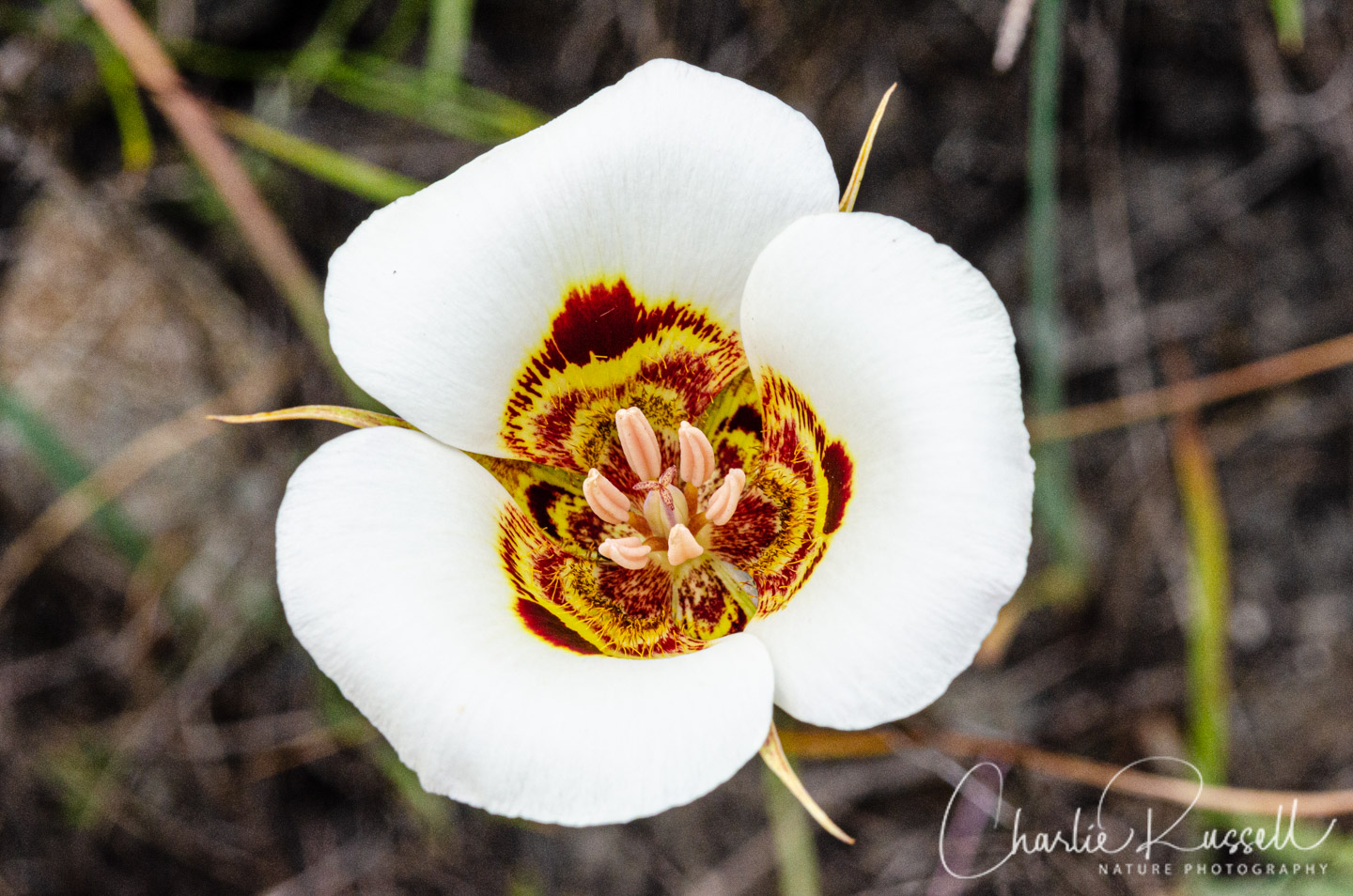
Leichtlin's Mariposa Lily

Leichtlin’s Mariposa Lily

This is a dry year and we weren’t sure what to expect. The hike is a long one if you go all the way to Glacier Lake, with a lot of climbing on both ends. It was worth it! It was warm (in the low 80′s) and there were mosquitoes near the meadows. That long hike out of the basin back to our car was exhausting, but we found a lot of flowers!

Note: Click on any photograph to see a larger image.

The Hike

This is a moderate to strenuous hike if you go all the way. You start at 7500′ elevation, and the lake is at about 7550′. Sounds easy? Well, there is around 1300 feet of elvation lost and gained during the hike, and that makes it a bit tough. And, darn it, you end the hike going uphill.  I’m not sure of the distance, different guides give different figures – this is somewhere between 7.5 and 9 miles round trip.

The drive in to the Grouse Ridge campground (the trailhead) is a rough dirt/gravel road. We made it with our Honda CRV, but you have to take it really slow. Keep your eyes open because there are several places along the drive where you can find wildflowers that you won’t see later. Well, keep your eyes on the road and have a spotter with you.

The hike starts at the trailhead at the Grouse Ridge campground. You head down the hillside (northeast) on an exposed hillside, but you get into the forest fairly quickly. Lots of flowers on the hillside going down.

There are several trails that branch off at various places. Many of them have been marked clearly by signs put up by the Boy Scouts (thanks!) so you shouldn’t have too much trouble. You always want to take the right hand trail towards Glacier Lake. A bit less than one mile there is a branch to Milk Lake that heads west, at about 1.7 miles there is a branch to Sawmill Lake, and shortly after that there is a branch to Sand Ridge. Always bear right.

Start of the trail

At the bottom of the ridge you have an easy trail through the forest, with occasional breaks for a meadow. Some meadows are still forming (they are half meadow, half lake), and there is one beautiful meadow (relatively dry) that was just covered with Penstemon, Monkeyflower and Lupine. Gorgeous! The only issue here is to watch out for the range cattle that are in the area (you’ll hear the cow bells).

The trail meanders across the stream bed several times. At this time of the year the stream was fairly dry, so this wasn’t a problem. Earlier in the year it could be a bit wet.

After the large meadow you start climbing again. First it is a gentle climb, then it starts to get a bit more serious. You start climbing up another ridge, and eventually come out of the forest into the exposed granite hillside. We were thinking about turning back at this point as the elevation and length of the hike were starting to get to us, particularly when we saw the steep exposed hillside we had to go up. The trail heads across the exposed granite and you had to pay attention so that you didn’t lose the trail.

Steep Climb

However, getting to the top of the hillside, there was a collection of flowers that we hadn’t seen in the more forested part. If you want to see the widest variety of flowers, you have to make that climb. Another benefit is that you have great views up there, well worth the trip.

HOWEVER, at the crest of the ridge, given that we had gotten a late start and we had a long way to go back, we turned around. We didn’t make it all the way to Glacier Lake.

Heading back down the hillside, my wife was glad that she had a pair of trekking poles.

The biggest problem with this hike was that, at the end, you have an uphill climb to the trailhead. Around 1.5 miles heading up, with the last half mile heading straight up the hillside. It was a bit strenuous.

Here’s a section of a map from the USGS web site. You can get the full map by clicking on the map locator link on the right of their web site, and searching for “English Mountain”. Note that there are several maps available, and the older ones might not have this particular trail marked on them. You can click on the map below to see the portion of the USGS map focusing on the trail.

Timing is Everything

The weather was excellent, a clear sunny day with temperatures reaching the low 80′s. We took this hike in the second week of July, but this was a dry year. You certainly can go earlier – there was evidence of many flowers that had bloomed earlier. The only potential problems with going earlier would be that the trail may be blocked by downed trees (it was apparent that a lot of work had been done to clear this trail) and it would be a lot wetter along the stream bed.

You could do it later, the areas around the meadows had many plants (particularly the corn lilies) that were just forming heads.

Directions

From Sacramento:
  • Take Highway 80 East.

    Waxy Checkerbloom

    Waxy Checkerbloom

  • Take Exit 161 and head west on Highway 20.
  • After about 4.3 miles you will see Bowman Road / Forest Road 18 on the right. This heads northeast and is a paved road.
  • About 6.3 miles further on this road you will see Forest Route 14, which should be marked as Grouse Ridge Road. Take this heading east.
  • Grouse Ridge Road is a gravel/dirt road that can have a lot of rocks and ruts. You can do it with a passenger vehicle but take it very slowly as it is rough.
  • At about 5.1 miles on Grouse Ridge Road you will come to the Grouse Ridge campground. You can head into the campground and you will find a trailhead sign and parking area. You can also go past the campground and there is another parking area just up the hill.

There is a pit toilet at the campground. No water (bring your own) and no further facilities along the hike.

The Flowers

Please feel free to help me with the identification of any “unidentified” flowers listed here, as well as correcting any errors I may make. Click on any photograph to see a larger image. I’ll start with a few favorites, and then the “gallery”. All pictures were taken with a Nikon D50 with a Nikkor 18-135mm zoom lens, or a Nikkor 60mm closeup lens.

The highlight of this hike, for us, was finding Fawn Lilies. We’ve never seen them before. We were lucky to find some in shady spots – there were a LOT of them around that had bloomed earlier, but were just setting seeds now. See how the flowers come out as white and yellow, and then change to purple. These are small plants, 6 to 8 inches tall generally, with flowers that are less than a half inch across.

Plainleaf Fawn Lily

Plainleaf Fawn Lily

Azure Penstemon were prolific up on the exposed granite ridge, just before Glacier Lake. It’s interesting how they start out yellow before the blossomes open up, then turn blue.

Azure Pentstemon

Azure Penstemon

There are many small lakes in the area, many that are gradually turning into meadows. This meadow was covered with Meadow Penstemon, Monkeyflower, Lupine, and even some Small Elephant’s Head (you had to look hard to find that).

Meadow of Flowers

Meadow Penstemon are very similar to Whorled Penstemon – I’m calling these Meadow Penstemon because they aren’t “glandular-hairy”.

Meadow Penstemon

Meadow Penstemon

Pussypaws is one of the most common flowers in the Sierras, I think. I see it in a lot of places, and I generally don’t pay a lot of attention. On THIS hike you HAD to pay attention, it was everywhere! There were open glades when hiking down that were covered with this, and practially glowing. Along the meadow where we found all the Penstemon, on the opposite side of the trail was another hillside covered with them. The cattle seemed to really enjoy them. I’ve never seen so many.

Pussypaws

Pussypaws

Pretty Face is a common lily in California – even so, it’s fun to find it. There were a LOT of them on this hike, particularly near the meadows.

Pretty Face

Pretty Face

My thanks to David Silva of David Silva Photography for suggesting this area for a hike! And to Sandy Steinman of Natural History Wanderings for help with some of the flower ID’s.

Read More

Butterfly Valley Botanical Area

| June 16, 2012 | Comments (2)
California Pitcherplant

I’ve wanted to visit the Butterfly Valley Botanical Area for a long time, so when we went orchid hunting recently near Quincy we made sure that we had enough time to visit this area. Instead of hunting orchids, we were hunting carnivorous plants!

Read More

Orchids in Plumas County

| June 13, 2012 | Comments (2)
California Lady's Slipper

More orchids in Plumas County! On the same trip where we found orchids near Quincy, we visited a few spots on the way up the Feather River Canyon. We found flowers in several places, but the most exciting was on a side trip on Caribou Road. Two kinds of orchids, Reed Lilies, Tiger Lilies and more!

Read More

Plumas County Wildflowers

| June 10, 2012 | Comments (1)
Mountain Lady's Slipper

Orchids! What a wonderful find! Plumas County is a wonderful place for wildflowers, and this year we were very lucky to be able to find several species of orchids, some quite rare.

Read More

Traverse Creek Wildflowers

| May 31, 2012 | Comments (1)
Wild Hyacinth

The Traverse Creek Botanical Special Interest Area is a 220 acre reserve out in the country between Georgetown and Placerville in El Dorado County. It is a small valley with serpentine soils and a nice creek, with a number of trails. It isn’t highly developed, but you can find a number of interesting flowers.

Read More

Page 1 of 3123